 IQDuino
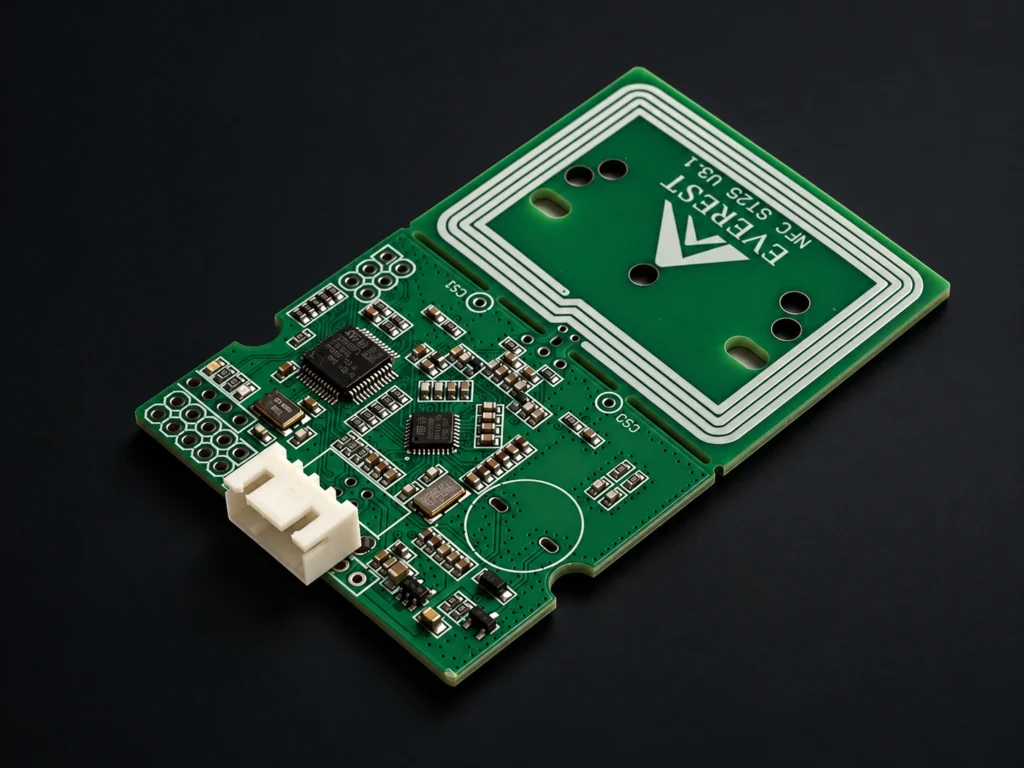
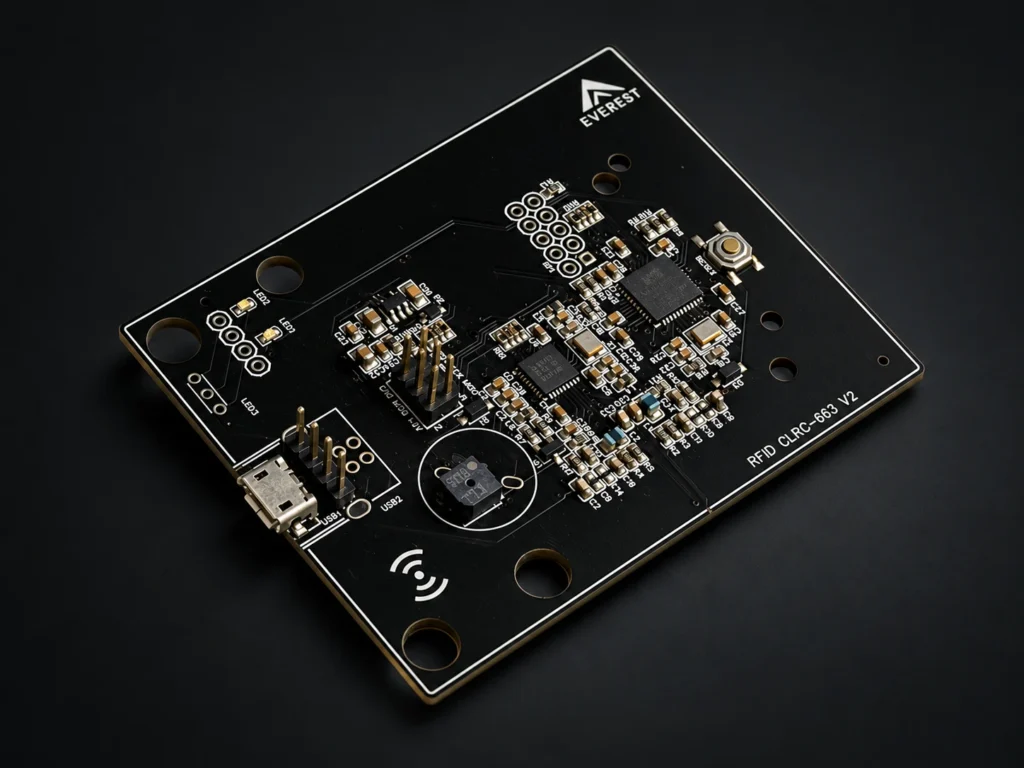
RFID platform comparison by tag technology
All four readers operate at HF 13.56 MHz. The table describes RF frontend capabilities and compatible tag families. Available read/write commands depend on the installed firmware.
| Standard / technology | Example cards and tags |
|---|---|
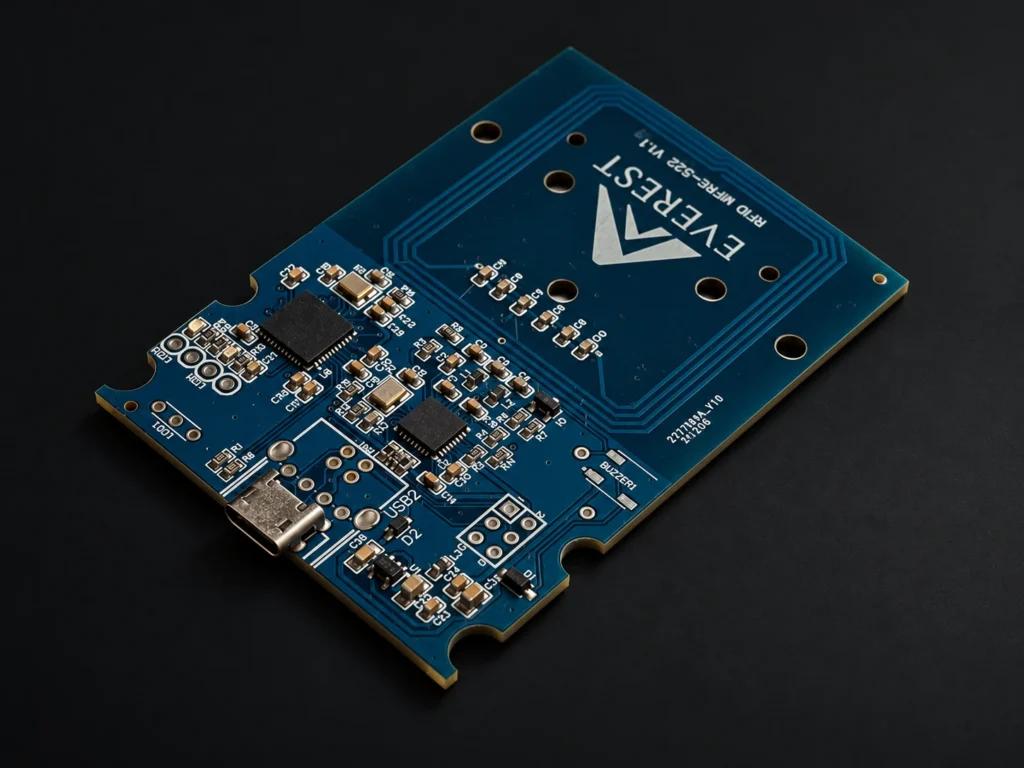
| MFRC522 | ISO 14443A · MIFARE / NTAG |
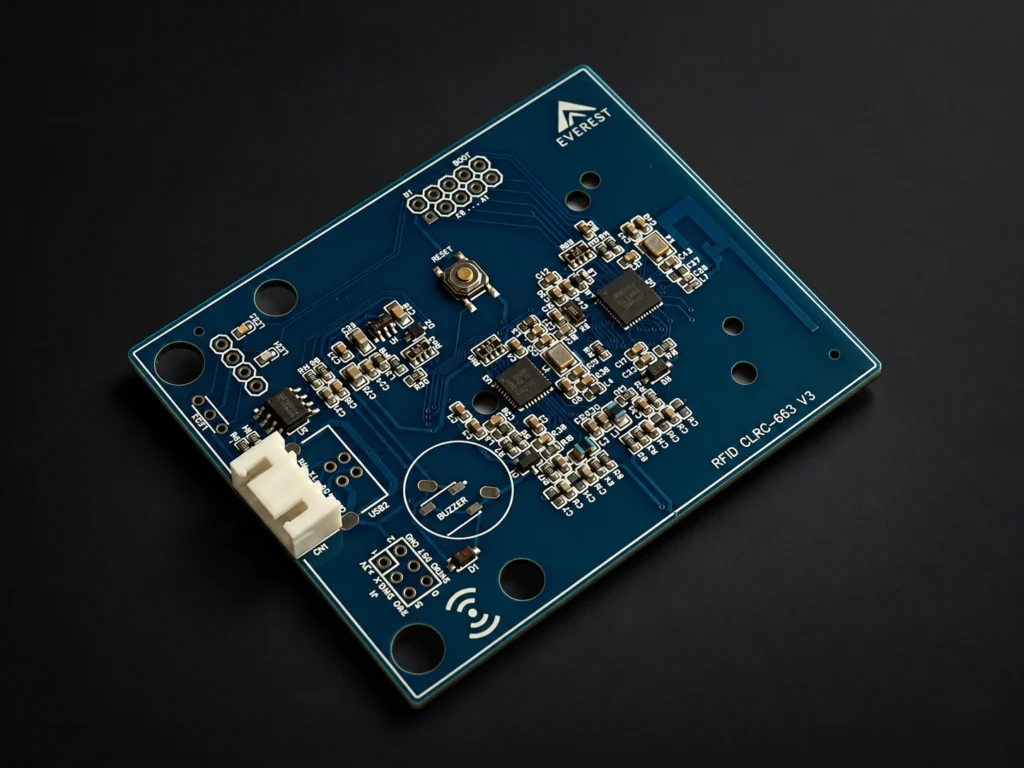
| CLRC663 + ATmega32U4 | ISO 14443A/B · MIFARE / NTAG · ISO 15693 / ICODE · FeliCa |
| CLRC663 + nRF52832 | ISO 14443A/B · MIFARE / NTAG · ISO 15693 / ICODE · FeliCa |
| ST25R3911B | ISO 14443A/B · NTAG · ISO 15693 / ICODE / ST25TV / ST25DV · FeliCa |
ST25R3911B implements ISO 15693 with a software stack using Stream mode.
MIFARE Classic on ST25R3911B requires software protocol implementation using Stream / Transparent mode.
Reading a UID does not grant access to protected memory. MIFARE Classic, Plus, DESFire and other protected cards require the appropriate commands, authentication algorithms and keys. NDEF handling is also software-based. RF support does not imply a ready-to-use bank payment solution.
LF 125/134.2 kHz tags (such as EM4100 and HID Prox) and UHF 860–960 MHz tags are not supported. A card, key fob, wristband or sticker form factor does not determine its protocol.
Manufacturer documentation: MFRC522, CLRC663, ST25R3911B, NTAG213/215/216, ICODE SLIX2.
Form factors and connections
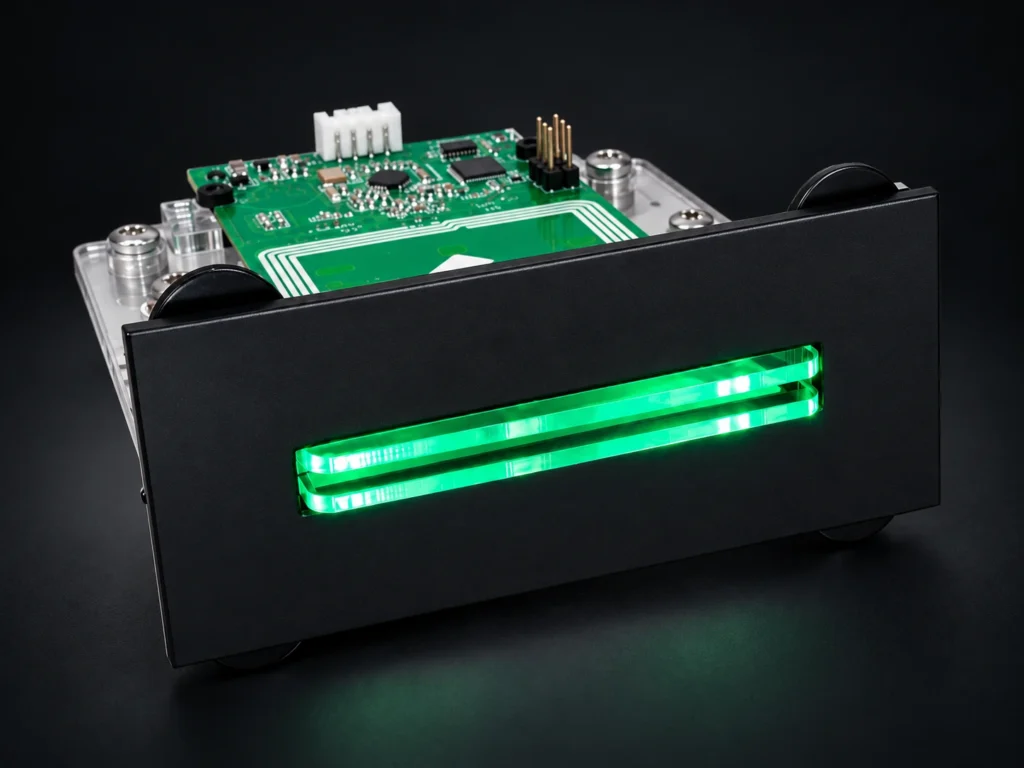
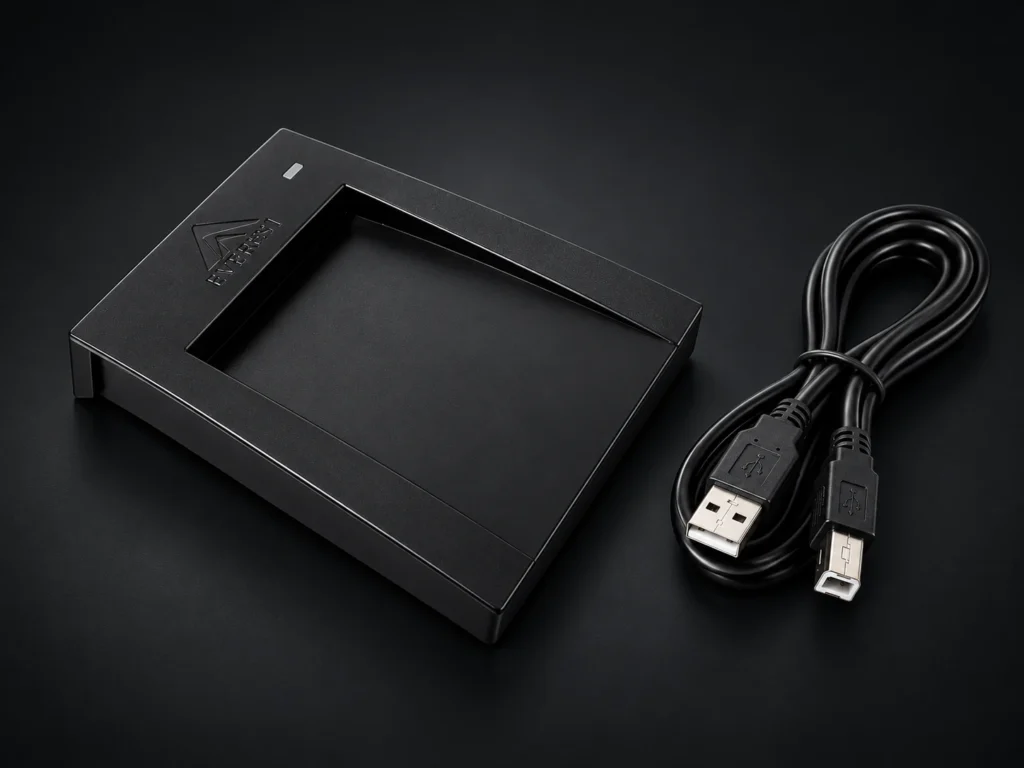
Choose an OEM board, desktop USB enclosure or flush-mount kiosk form factor. The kiosk panel supports red, green and yellow indication. USB connector options include USB-B, Micro-USB and USB-C. The selected board determines the available interfaces; the exact enclosure configuration is agreed when ordering.