 IQDuino
Supported RFID tags and cards
All four readers operate at HF 13.56 MHz. The table describes RF frontend capabilities and compatible tag families. Available read/write commands depend on the installed firmware.
| Standard / technology | Example cards and tags |
|---|---|
| ISO/IEC 14443A | MIFARE Classic Mini / 1K / 4K, MIFARE Ultralight; NTAG213 / 215 / 216 (NFC Type 2). MIFARE Plus and DESFire: ISO 14443A communication is possible; application commands and authentication require firmware support. |
MFRC522 does not support ISO 14443B, ISO 15693 or FeliCa. Choose a CLRC663 or ST25R3911B platform for these tags.
Reading a UID does not grant access to protected memory. MIFARE Classic, Plus, DESFire and other protected cards require the appropriate commands, authentication algorithms and keys. NDEF handling is also software-based. RF support does not imply a ready-to-use bank payment solution.
LF 125/134.2 kHz tags (such as EM4100 and HID Prox) and UHF 860–960 MHz tags are not supported. A card, key fob, wristband or sticker form factor does not determine its protocol.
Manufacturer documentation: MFRC522, NTAG213/215/216, ICODE SLIX2.
Platform overview
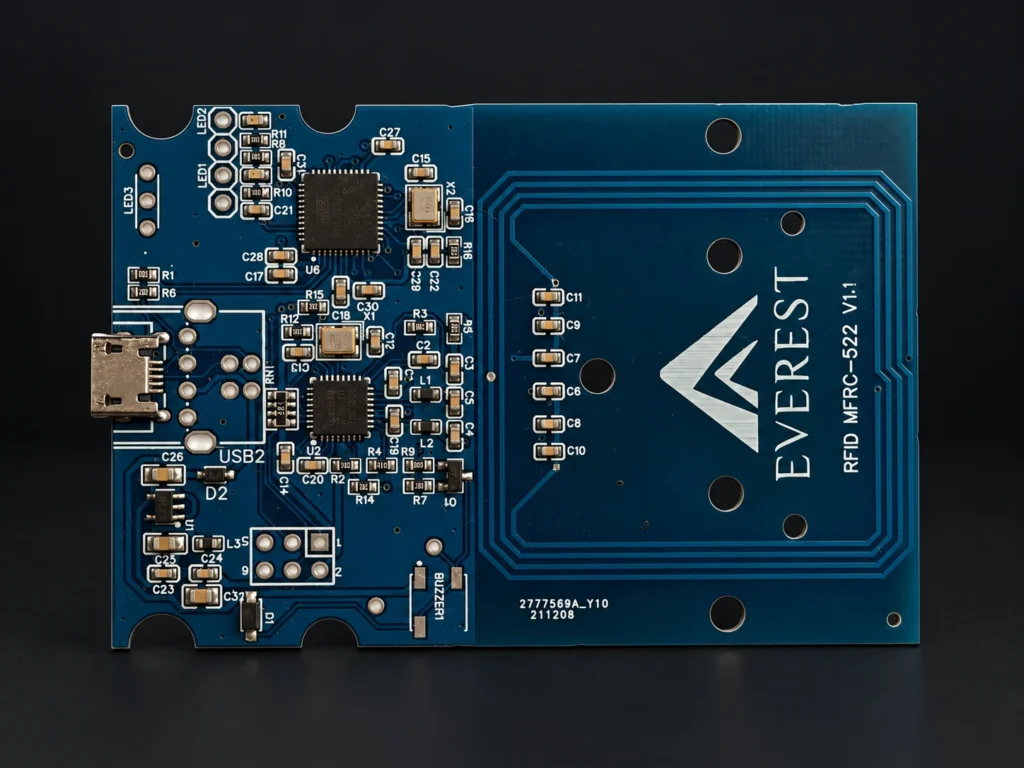
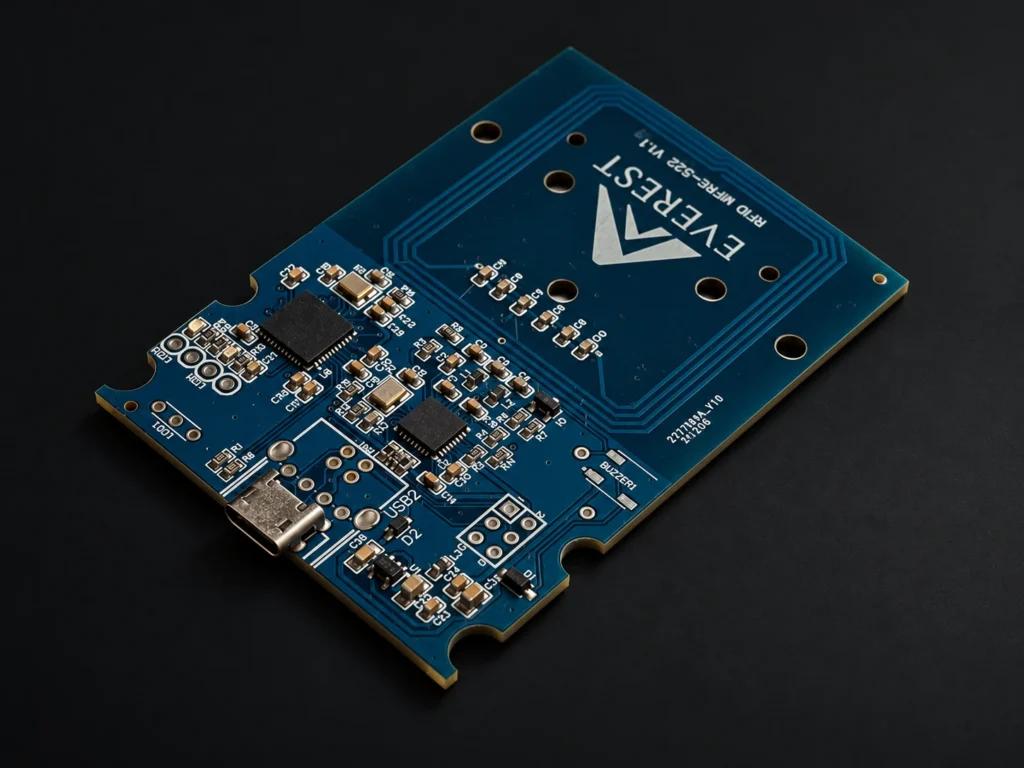
Adapt the device logic to your project. The microcontroller, RF circuitry and antenna are already implemented, letting developers focus on the application protocol, host communication and software integration.
Key specifications
| Microcontroller | ATMEGA32U4-MUR |
|---|---|
| RF frontend | MFRC52202HN1,151 |
| Device interfaces | UART / USB |
| Reading distance, manufacturer stated | 5 cm |
Contactless interface
RF frontend frequency: 13.56 MHz. Available protocols and card operations depend on the RF chip and firmware. Required cards and application commands are verified for the selected configuration.
Form factors and connections
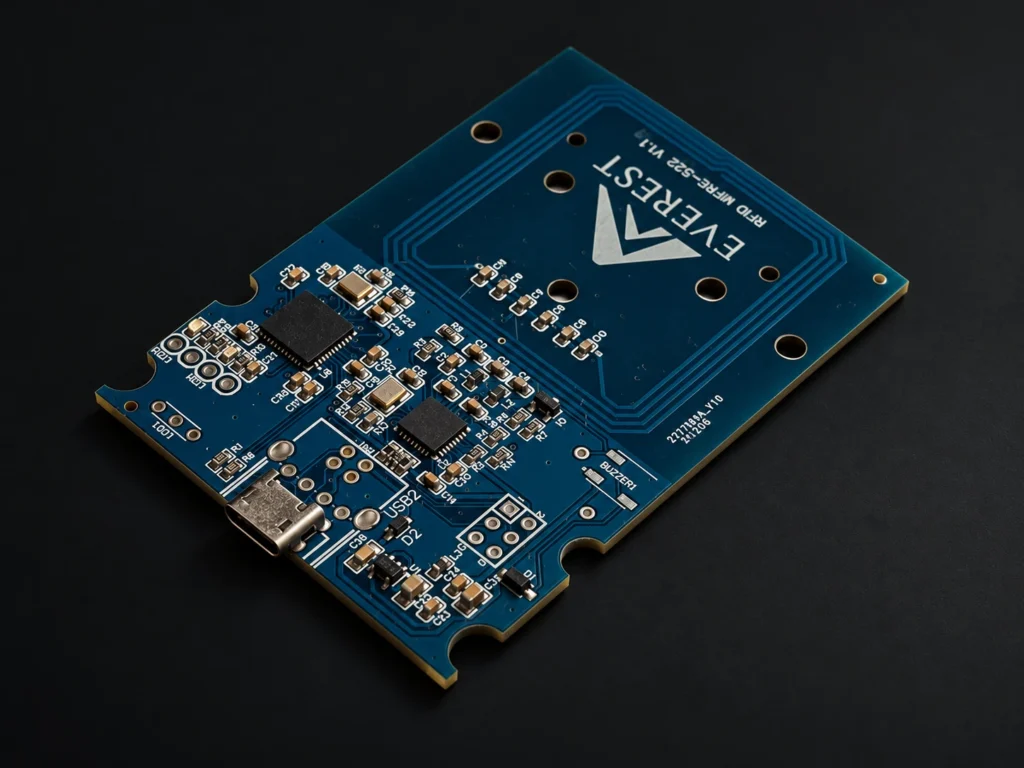
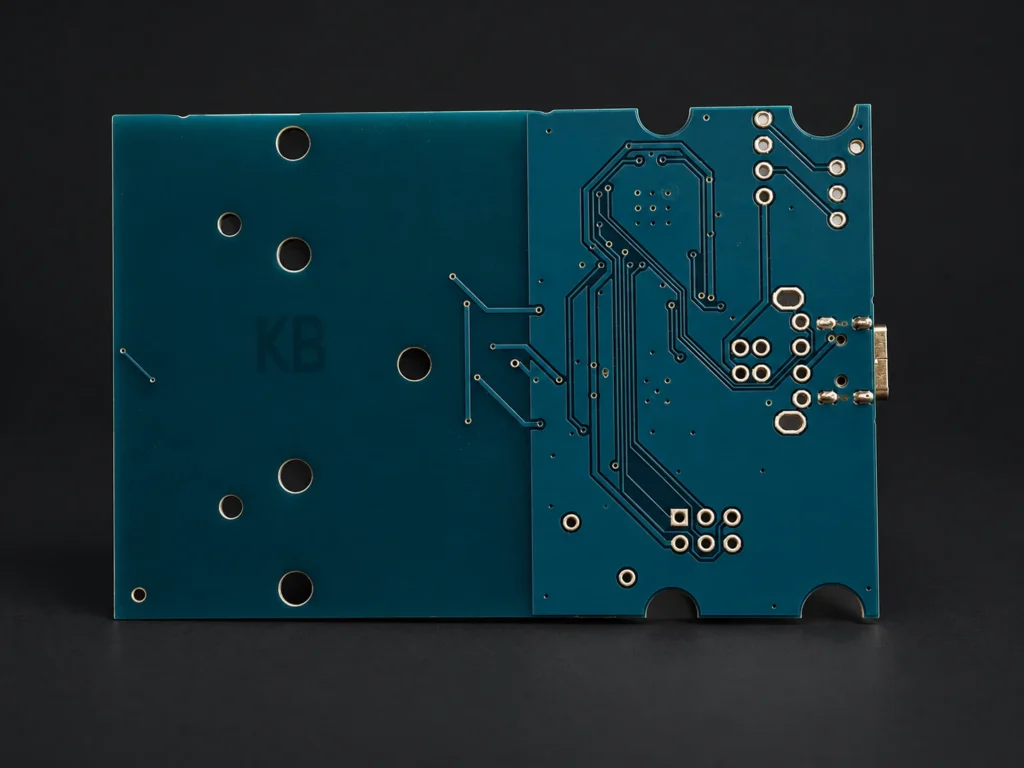
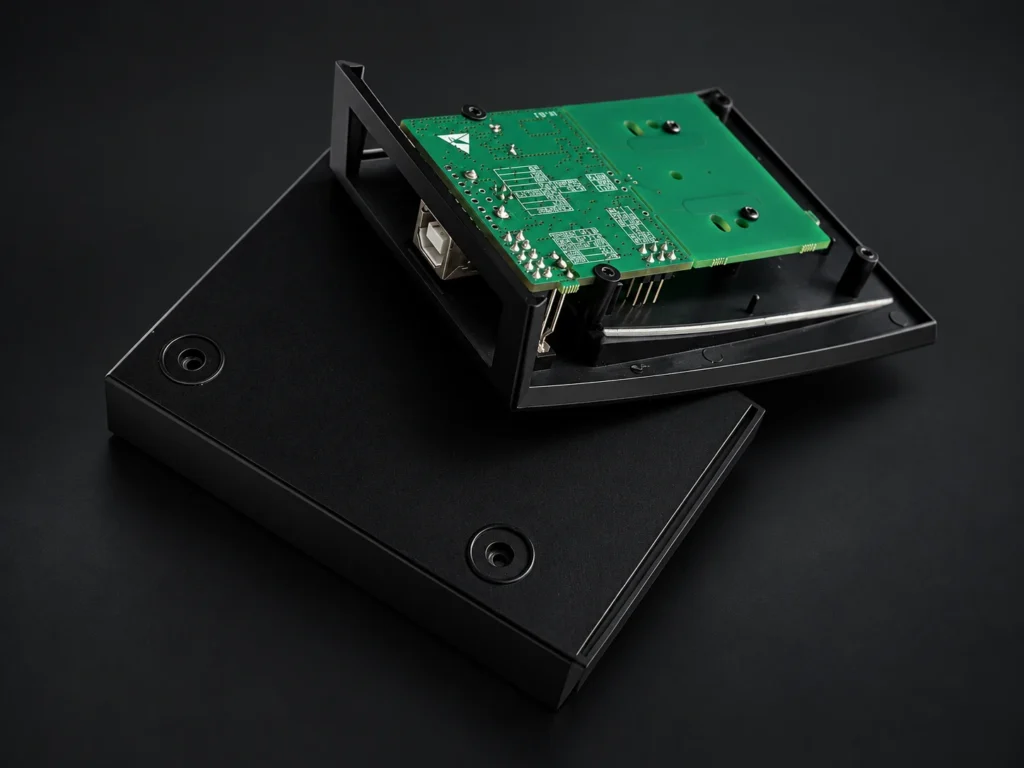
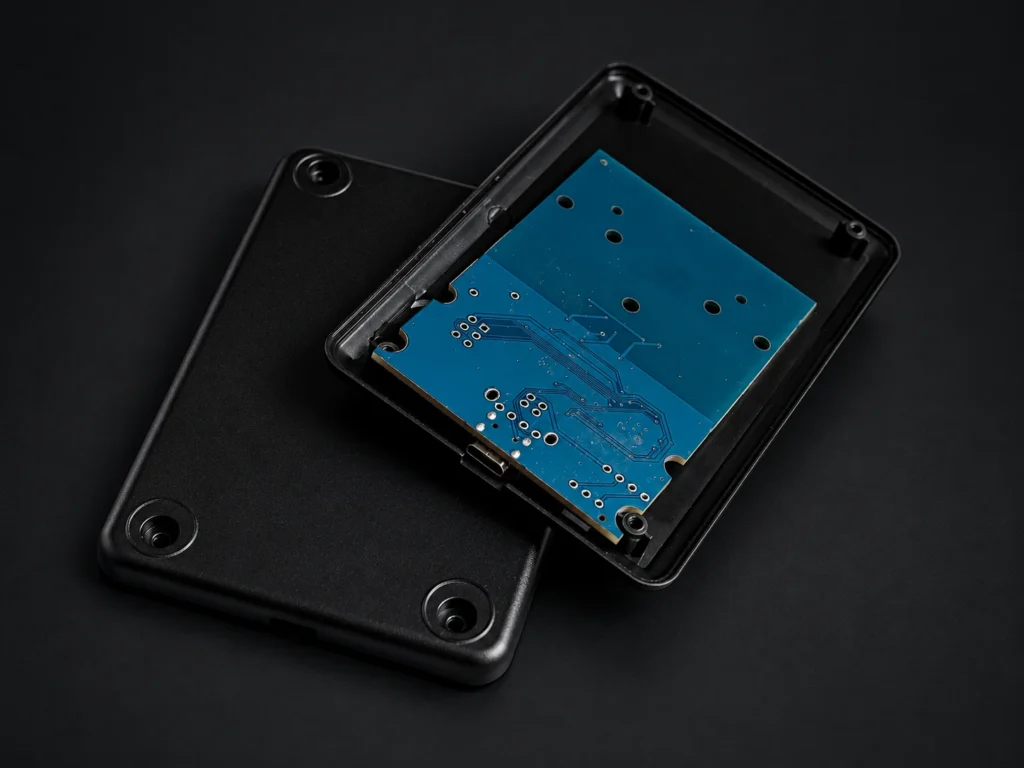
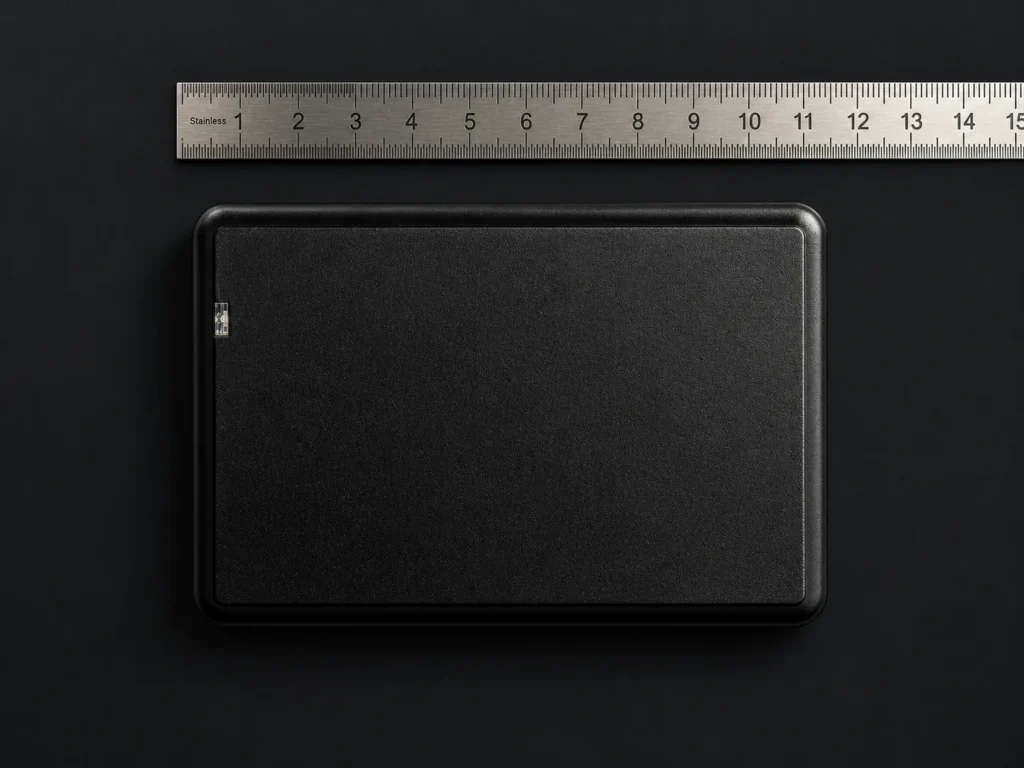
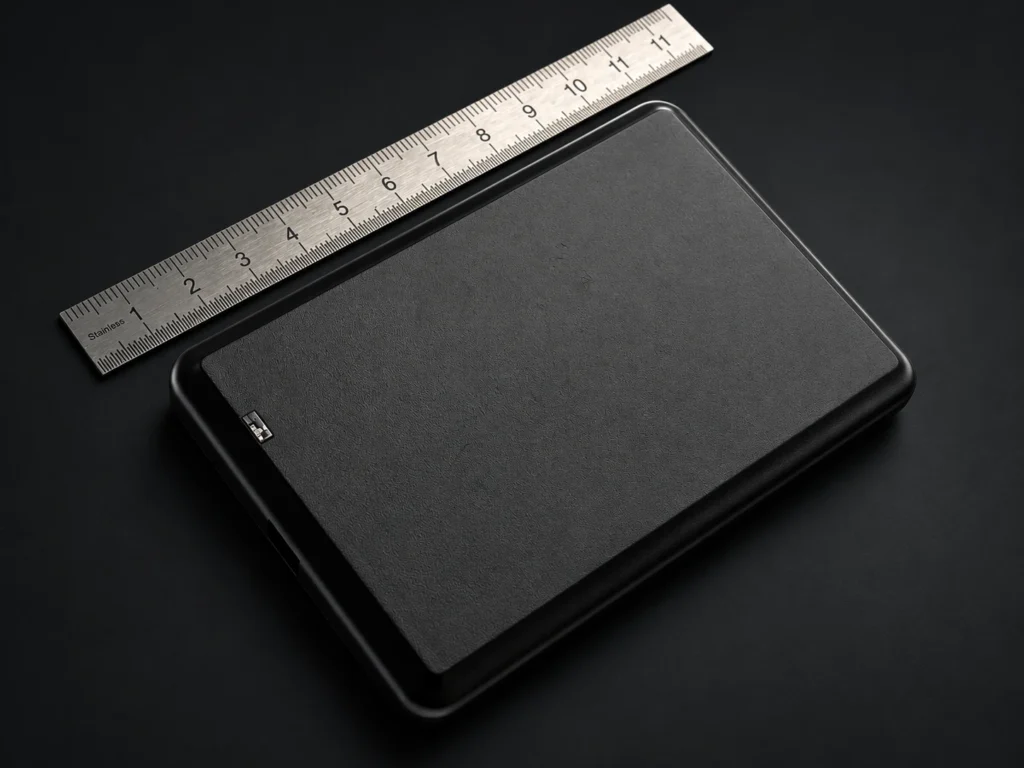
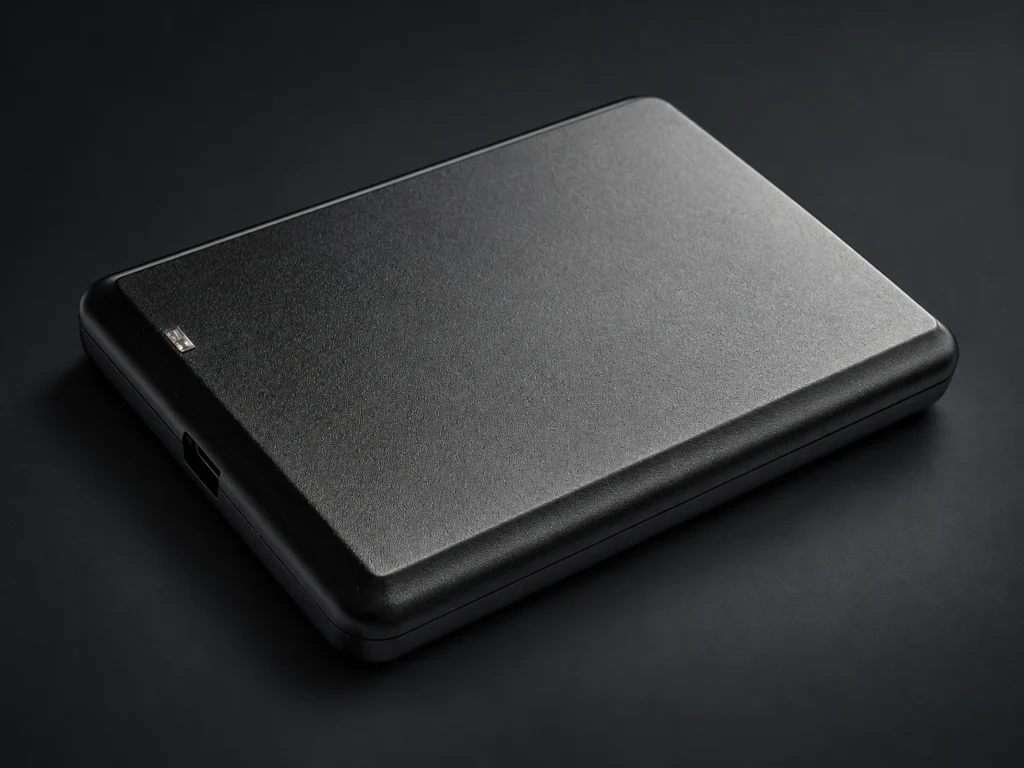
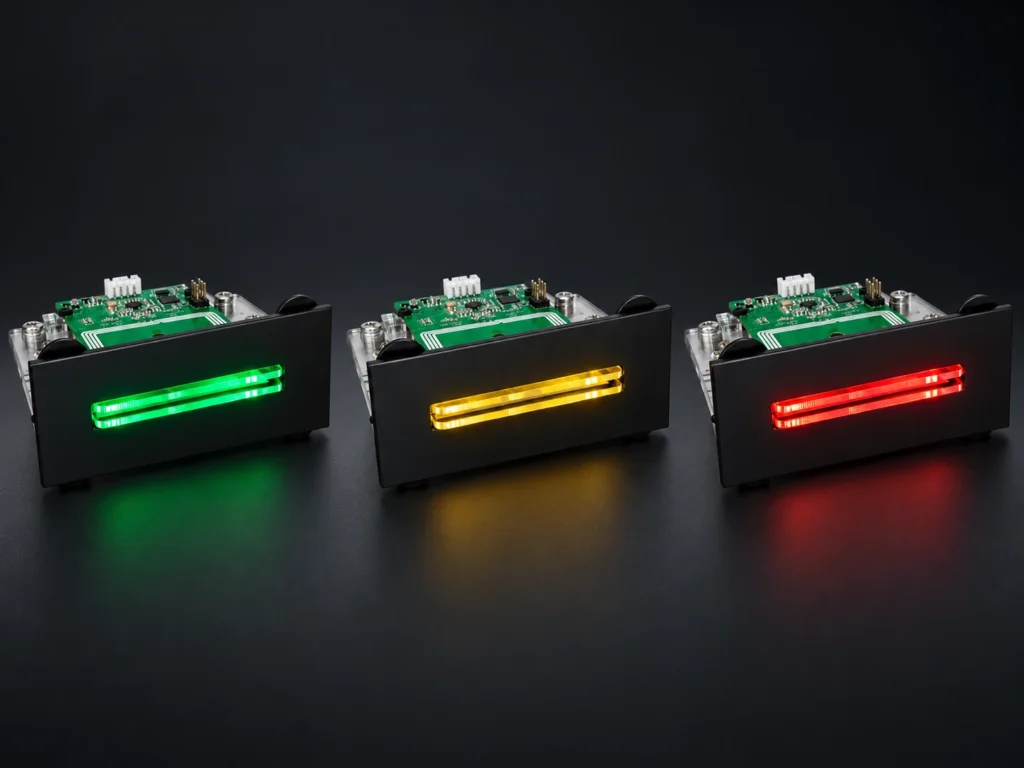
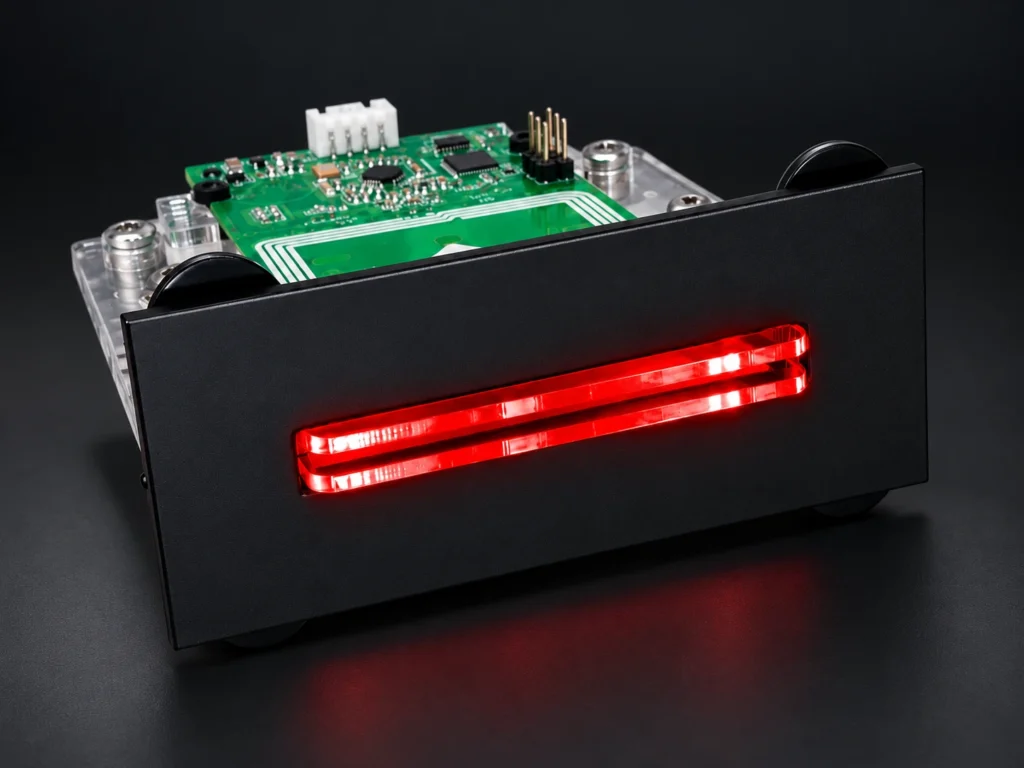
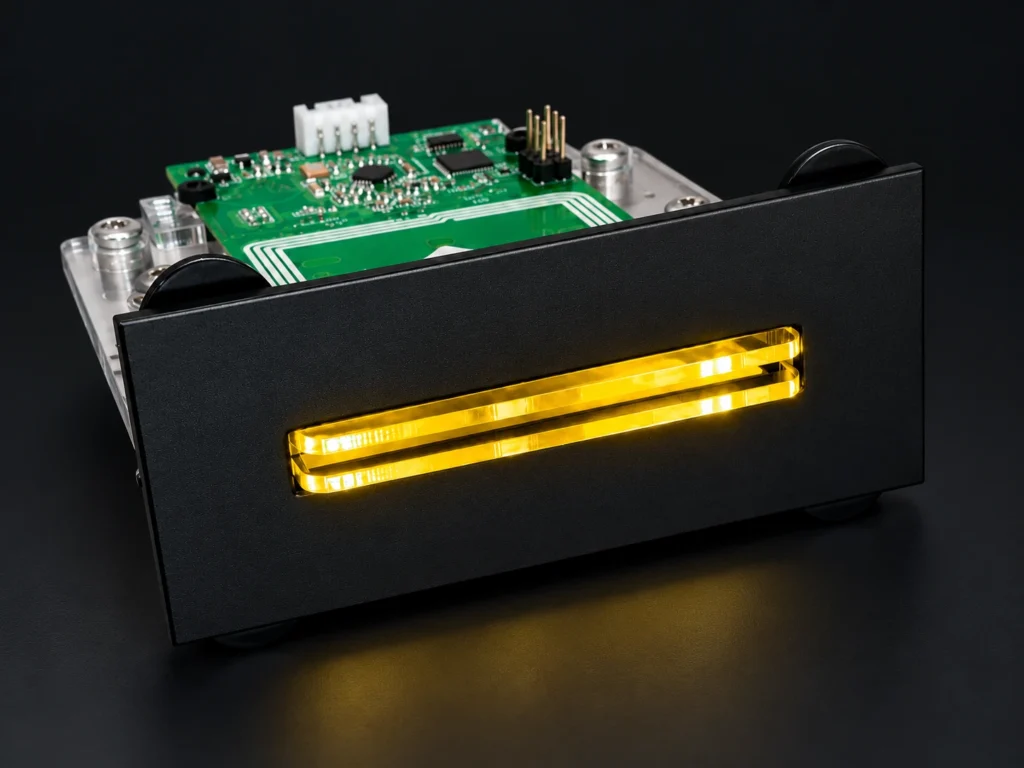
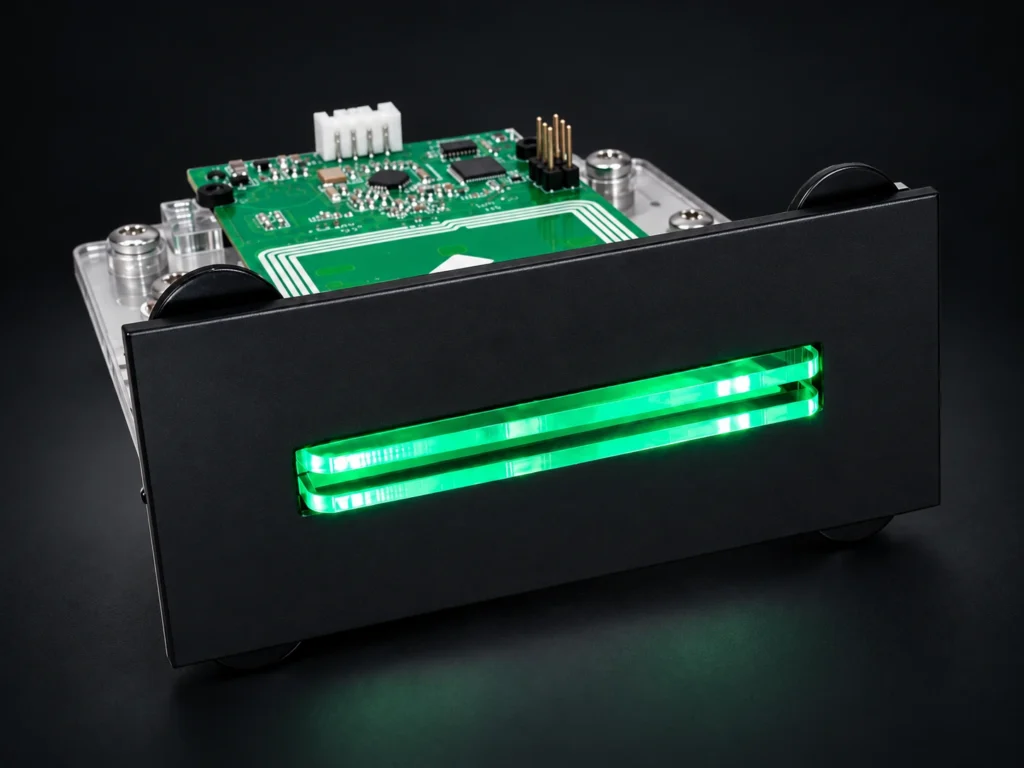
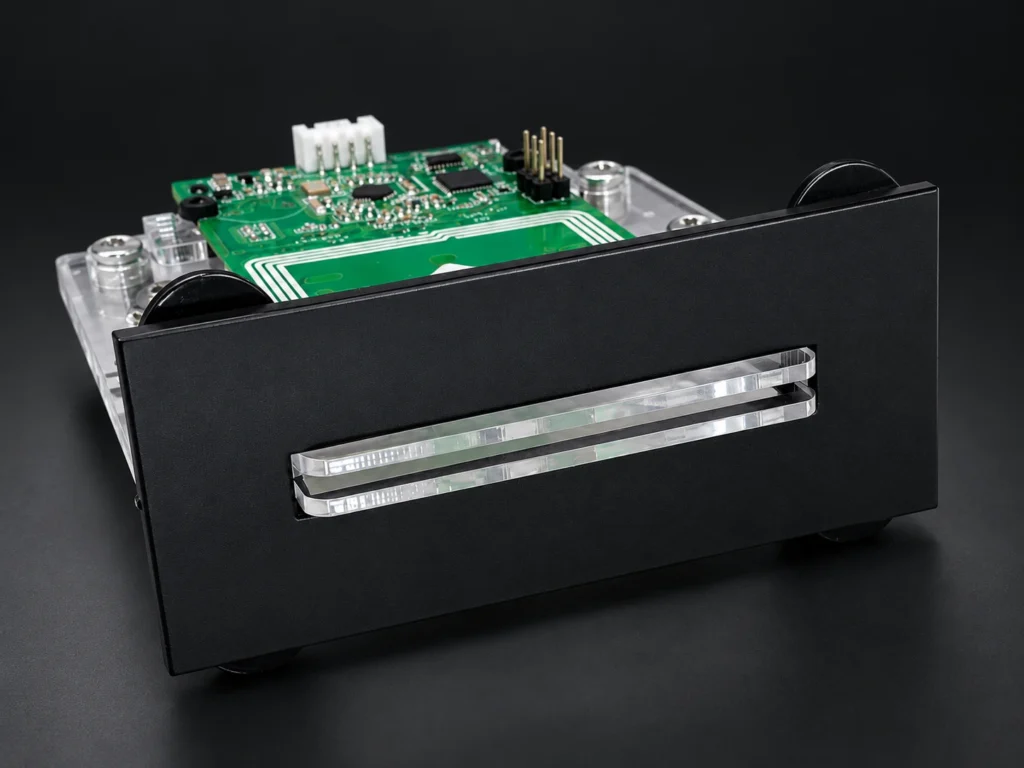
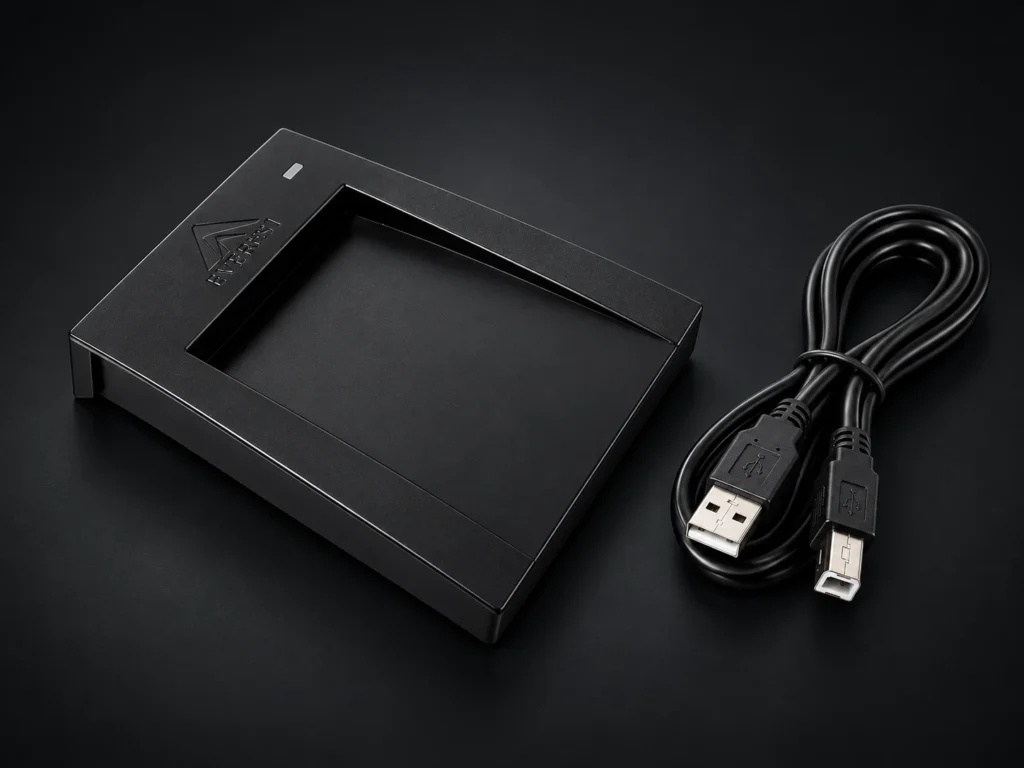
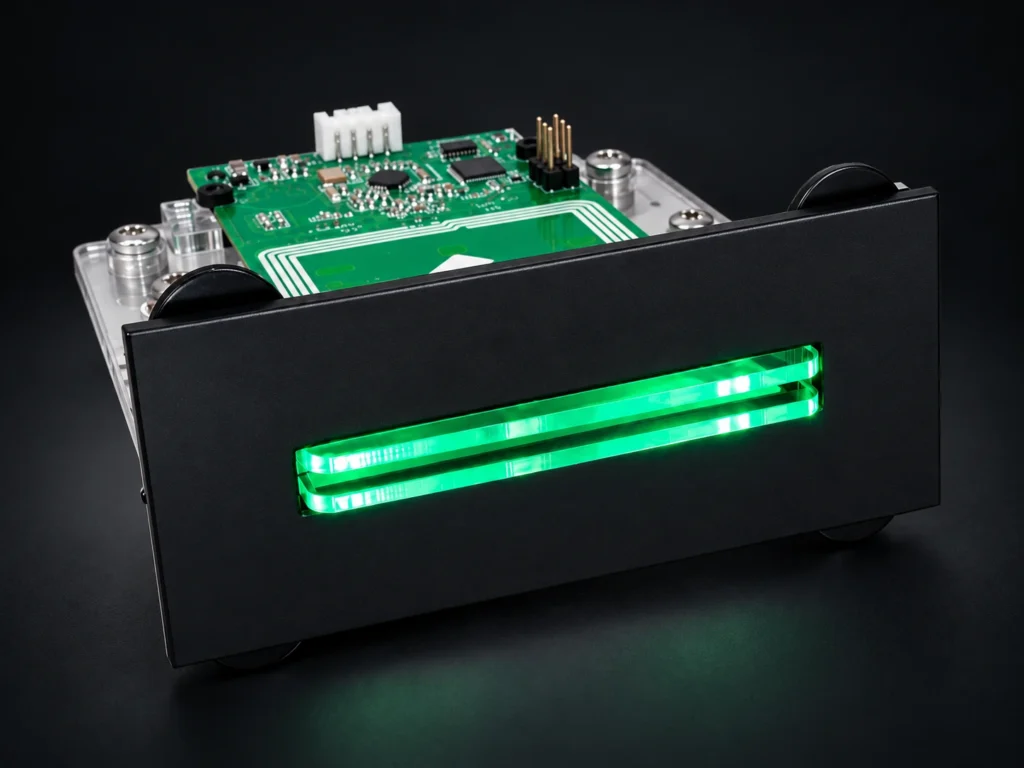
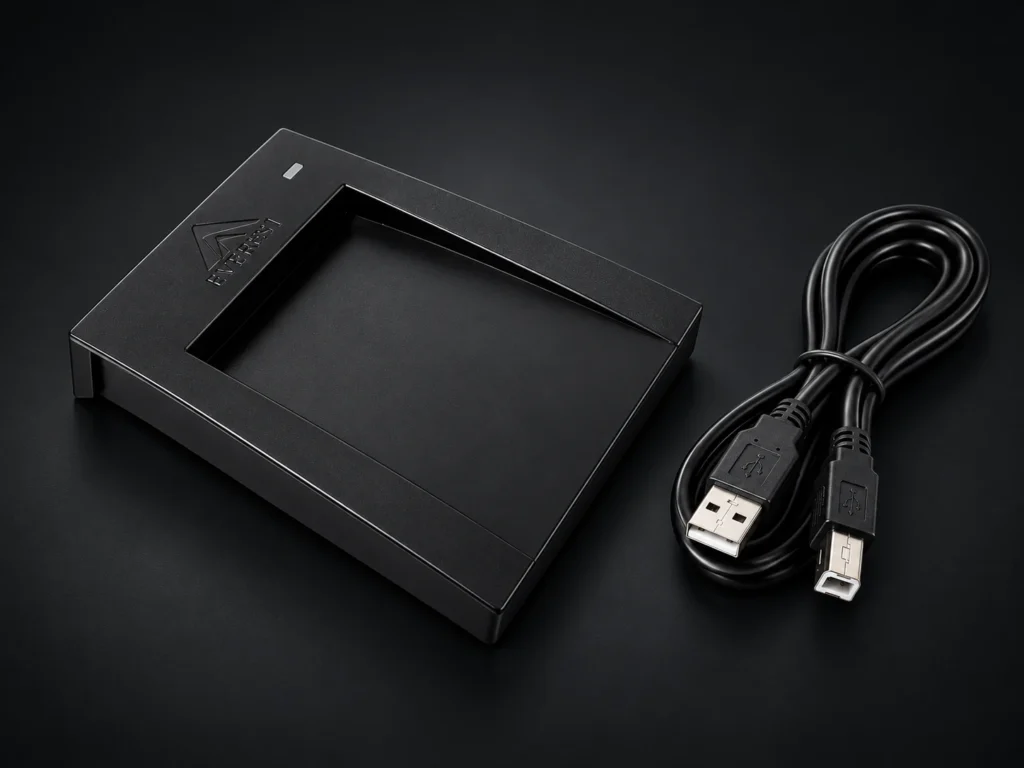
Choose an OEM board, desktop USB enclosure or flush-mount kiosk form factor. The kiosk panel supports red, green and yellow indication. USB connector options include USB-B, Micro-USB and USB-C. The selected board determines the available interfaces; the exact enclosure configuration is agreed when ordering.
| OEM | Bare circuit board |
|---|---|
| USB-B | Large desktop enclosure |
| Micro-USB / USB-C | Compact enclosure |
| Kiosk / LED | Red / Green / Yellow |
Your own firmware
Adapt the device logic to your project. The microcontroller, RF circuitry and antenna are already implemented, letting developers focus on the application protocol, host communication and software integration.
Applications
User identification in self-service kiosks, equipment checkout, tool and access-card tracking, operator workstations and local automation. The reader sends events to your system; application firmware and host software determine how they are processed.
The manufacturer reports several years of continuous 24/7 operation for the controllers and readers.
Choose a configuration
Tell us the processor, interfaces, cards, mounting format and SBC model you need. We will prepare a configuration for your project.
Reading distance depends on the card, antenna, enclosure and installation. The quoted 10+ cm or 5 cm values are supplied by the device manufacturer.
RF-chip protocols
ISO/IEC 14443 A · MIFARE · NTAG
These are RF-chip capabilities. The actual device command set depends on its firmware.
Photos and configurations